[AI Summary] An organizational GHG inventory (ISO 14064-1) measures a company’s emissions over a year; a product carbon footprint (ISO 14067) measures the life-cycle emissions of a single product. Because a company makes multiple products and each customer sets different data-quality requirements, product footprinting involves far more work and cost than an organizational inventory. For SMEs and ERP systems, the main and most expensive cost is connecting to an international database. The WebLCA plan provides platform-licensed use of up to 100 international datasets in a product carbon footprint model through an official ecoinvent channel, keeping costs under control. An EPD, by contrast, follows a separate LCA/PCR/LCI modeling path.
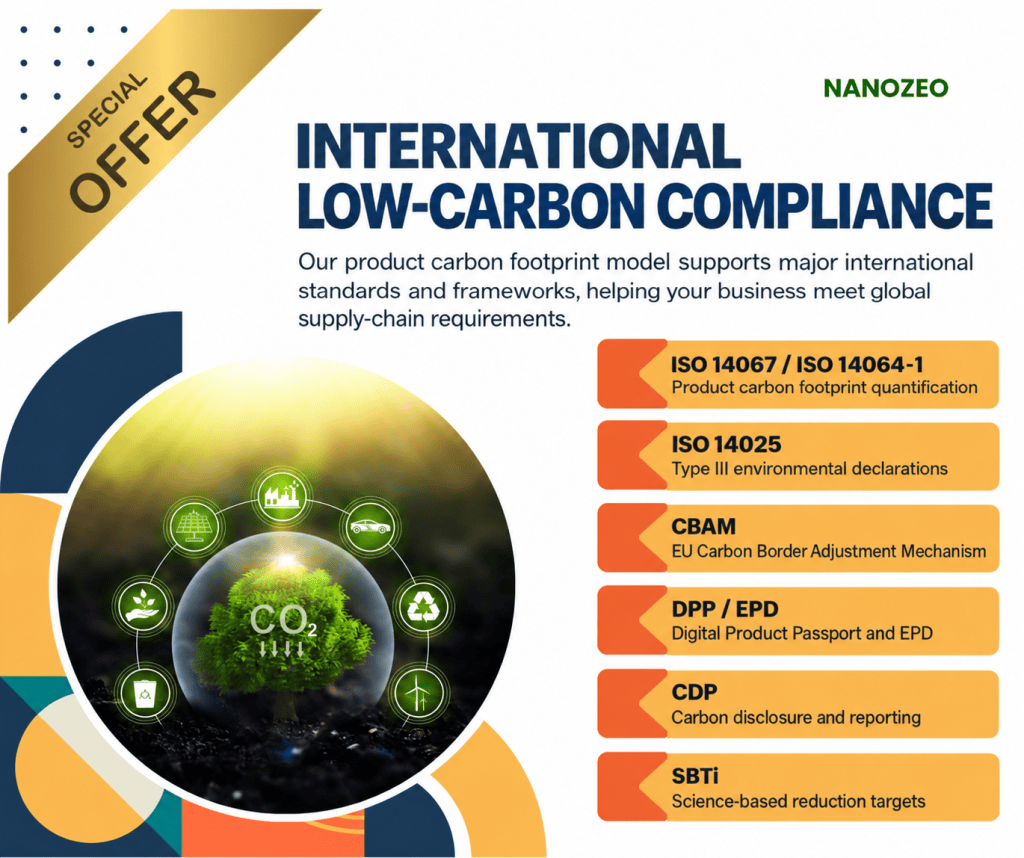
Product footprints and organizational inventories measure different things
An organizational GHG inventory (ISO 14064-1) answers the question “How much does this company emit in a year?" It covers fuel and electricity at factories and offices, plus Scope 3 emissions where required, and is prepared once a year for the whole company.
A product carbon footprint (ISO 14067) answers a different question: “How much does this one product emit from raw materials to factory gate (or to end of life)?" It requires defining a functional unit and system boundary first, then feeding activity data on materials, energy, transport and waste into a life-cycle model.
The two differ in data, scope and purpose, and one cannot replace the other. Completing an organizational inventory does not give you a product carbon footprint.

Why does product footprinting multiply the workload?
A company has several products. An organizational inventory is one report per year, but a product carbon footprint needs one model per product. The more product lines, the more models.
Each customer sets different data-quality requirements. Some brand customers accept estimates based on secondary database data, some require primary supplier data, and others require third-party verification. The same product may need data at different depths for different customers.
The biggest cost for SMEs: connecting to an international database
A product carbon footprint needs background data (emission factors) for upstream materials, energy and transport. A company’s ERP system records quantities and purchasing data, but holds no emission factors. To calculate a product footprint, the company must connect to an international database.
A full database license, plus professional software and modeling staff, is often the main and most expensive part of the project for a typical SME or ERP system. Most SMEs only need a few dozen datasets, yet end up paying for the entire database.
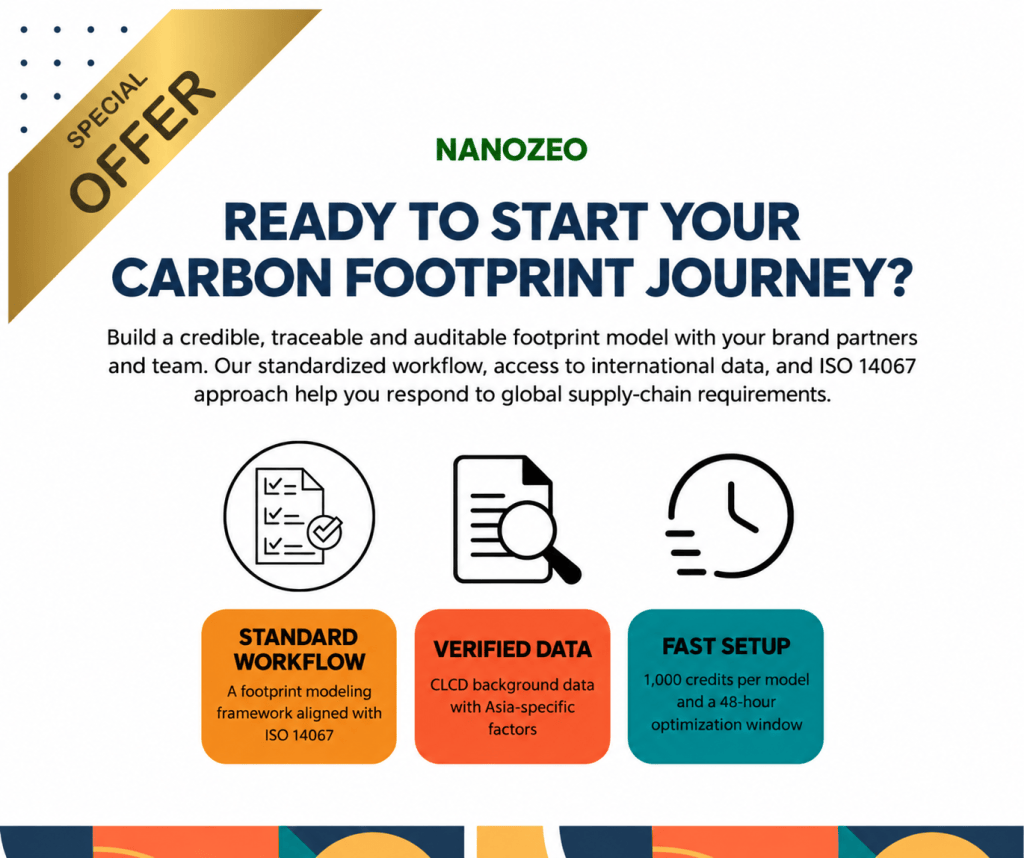
The WebLCA plan: 100 datasets on demand through an official ecoinvent channel
eFootprint, part of the WebLCA platform, is developed by IKE Environmental Technology and listed among the partners on ecoinvent’s official website. Through the platform, this plan provides an official license to the latest version of ecoinvent (currently 3.12), allowing companies to use up to 100 international datasets in a product carbon footprint model:
- Product carbon footprint model (Asia edition): NT$6,000, with built-in databases such as CLCD and ELCD
- International add-on (100 ecoinvent datasets): NT$18,000, for a combined NT$24,000 with a one-year platform license
- Footprint reports can be generated and downloaded; under the license terms, the raw LCI dataset list cannot be exported
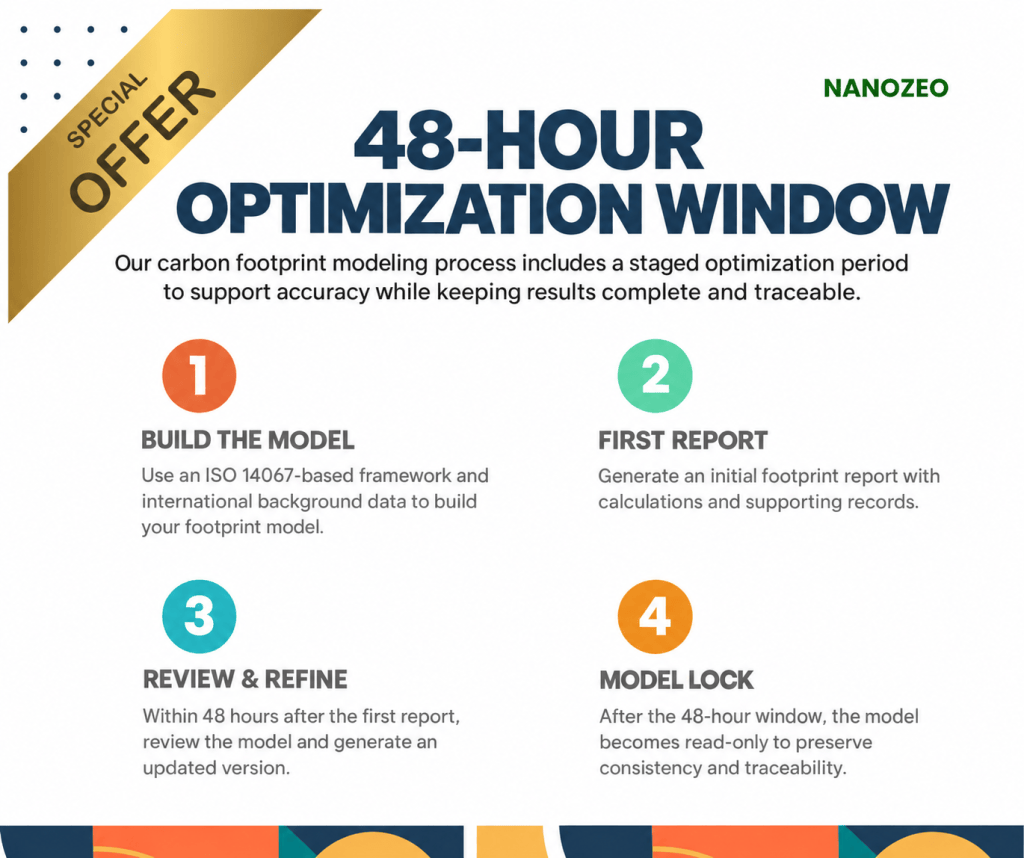
- After the first report is generated, there is a 48-hour editing window, after which the model is locked to keep results consistent and verifiable
Companies pay only for the datasets they actually use rather than the whole database, which keeps costs under control.
How does this differ from EcoVane?
EcoVane/EcoPortal uses an annual account model and suits companies with many products that need a full LCA covering multiple environmental impacts. WebLCA charges per product model and has a lower entry threshold, making it suitable for completing the footprint of one or two products first. It is one of the channels commonly used by SMEs and independent consultants preparing for verification. The two are not substitutes; the choice depends on the number of products and the intended use.
An EPD is a separate path
A product carbon footprint covers greenhouse gases only. An Environmental Product Declaration (EPD) requires a full LCA covering multiple environmental impacts, an LCI model built according to Product Category Rules (PCR), and verification under an EPD programme. In practice, companies whose data is still at an early stage often start with a product carbon footprint and upgrade to an EPD later.
FAQ
We already have an organizational inventory. Do we still need a product carbon footprint?
Yes, if your customers ask for product-level data. Organizational inventory results cannot be converted directly into a single product’s footprint.
Are 100 datasets enough?
It depends on the complexity of the product’s materials and processes. We recommend first checking the names and regions of the datasets you need on the platform (free of charge), using built-in databases such as CLCD where possible, and filling gaps with ecoinvent.
Is a system-generated report the same as third-party verification?
No. The system provides calculation and reporting tools. Whether third-party verification is needed depends on your customer’s requirements, and the outcome rests with the verification body.
Further reading
For plan details, pricing and purchase terms, see NANOZEO: ecoinvent 3.12 100-dataset license plan for product carbon footprints (in Traditional Chinese).
This article explains general principles and was updated in October 2026. Platform and database terms are governed by the license terms in effect at the time of purchase.


發表留言